


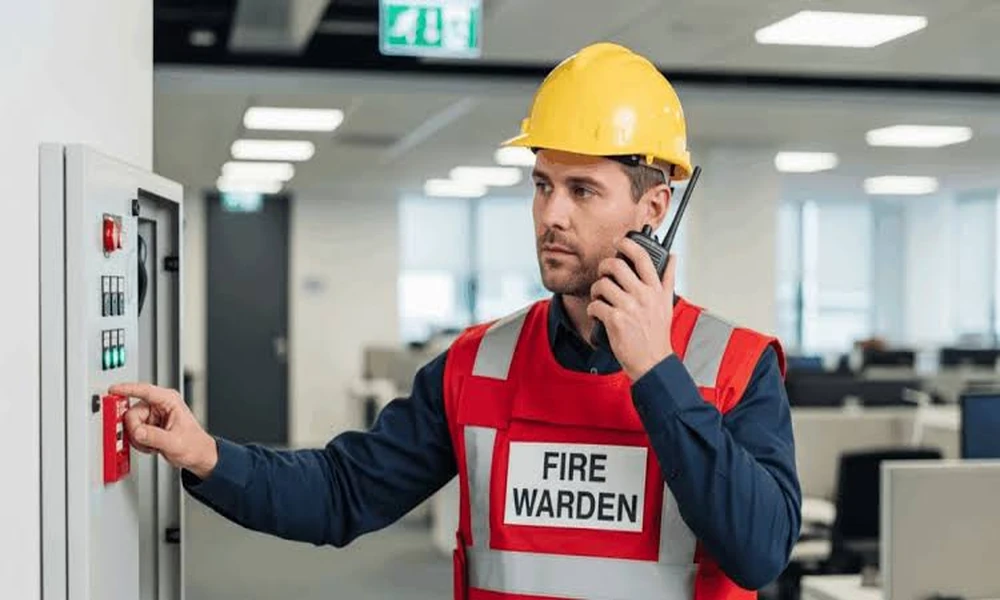
Fire watch guards and facility workers have distinct tasks, although their roles sometimes overlap when a structure faces elevated fire danger. Cooperation between the two groups is crucial whether maintenance is being done, hot work is being done, or fire protection equipment is temporarily unavailable. Effective coordination ensures that information reaches the appropriate parties, risks are reported on time, and everyone knows what to do if conditions change.
Effective coordination becomes even more important when fire watch personnel are integrated into a facility’s existing safety procedures. Working with Irvine fire watch guards can help facility staff maintain clear communication about changing work conditions, restricted areas, maintenance activities, and potential fire hazards. Establishing expectations before an assignment begins allows both groups to understand their responsibilities and work together efficiently if a hazard or emergency develops.
2. ESTABLISHING CLEAR RESPONSIBILITIES
The duties of the fire watch crew should be made clear by facility management before the start of a fire watch assignment. Guards should be aware of the places that need to be watched over, the dangers that exist, and who has the right to receive reports. Employees at the facility should be aware of the guard’s responsibilities and refrain from presuming that fire watch members are in charge of duties that are not part of their job description or training.
3. SHARING INFORMATION BEFORE WORK STARTS
Guards and facilities staff can come to an understanding through a quick briefing. The fire watch crew should be informed about any changes to regular building operations, hot-work sites, temporary equipment, restricted areas, and maintenance activities. Additionally, facility personnel should give information on designated assembly places, communication channels, emergency exits, and alarm systems.
4. MAINTAINING OPEN COMMUNICATION
Communication should continue throughout the task, rather than just after the initial briefing. When work circumstances change, facility employees should notify fire watch guards, and guards should report smoke, sparks, unusual heat, broken equipment, blocked exits, or other issues right away. Clear and succinct communication is essential, especially when the information may call for quick action.
5. COORDINATING DURING MAINTENANCE WORK
A facility’s typical safety circumstances may be momentarily altered by maintenance operations. Employees may open access points, move equipment, isolate systems, or temporarily create dangers. In order to modify their observations, fire watch guards must be informed of these developments. Whenever feasible, facility managers should let the fire watch team know about anticipated changes so they can get ready rather than reacting in the dark.
6. RESPONDING TO EMERGENCIES TOGETHER
Coordination becomes crucial in the event of a fire or other significant disaster. When necessary, guards should sound the alarm, adhere to the specified emergency protocol, and notify facility staff or emergency responders of pertinent information. Employees at the facility can assist with evacuation, keep track of residents, give site details, and arrange for rescuers’ entry.
7. CONCLUSION
Effective coordination between fire watch guards and facility personnel is dependent on shared information, clearly defined tasks, consistent communication, and effective handovers. Both organisations promote a coordinated reaction when threats arise and help to keep knowledge of changing situations. Fire watch operations become more reliable and responsive when they operate as a cohesive team rather than as distinct departments. A better foundation for workplace fire safety is created by clear communication before to, during, and following an assignment.
